Emirates Heritage Village Dubai is a living museum located in Al Shindagha, near Dubai Creek, that recreates traditional Bedouin life before the oil boom. However, over 2.4 million visitors explore its mud‑brick houses, date‑palm shelters, and artisan workshops each year. In fact, this open‑air venue offers one of the most authentic cultural encounters in the UAE, making it essential for travellers who want to understand Dubai’s roots.
- Location: Al Shindagha, Bur Dubai (along Dubai Creek)
- Best Time to Visit: Morning (9:00–11:00 AM) or late afternoon (4:00–6:00 PM) October to April
- Duration: 1.5 to 2.5 hours
- Highlights: Bedouin tent, pearl‑diving exhibit, pottery & weaving demonstrations, souk replica
- Ideal For: History lovers, families with school‑age children, photographers, culture seekers

Over 2.4 million visitors explore Emirates Heritage Village Dubai annually, yet many miss its deeper cultural stories. This guide delivers everything you need to know – hours, exhibits, insider tips, and how to combine it with nearby attractions. However, without a knowledgeable guide, you might walk past the most fascinating details. Additionally, the village’s layout can feel confusing if you don’t know the sequence of rooms.
At TripHabibi, our team of Dubai‑based travel experts has helped over 10,000 travellers experience the UAE authentically. For this reason, we offer private, customised tours – not crowded group experiences. Contact our local experts or message us on WhatsApp for a personalised itinerary that includes Emirates Heritage Village Dubai alongside the Al Shindagha Museum and an abra ride.
Ready to Experience Emirates Heritage Village with a Private Guide?
Skip the crowds. Private tours, flexible timing, expert local guides.
Browse Private Tours →Popular Tours & Activities
.jpg)
Understanding Emirates Heritage Village Dubai
What Makes Emirates Heritage Village Dubai Unique in the UAE?
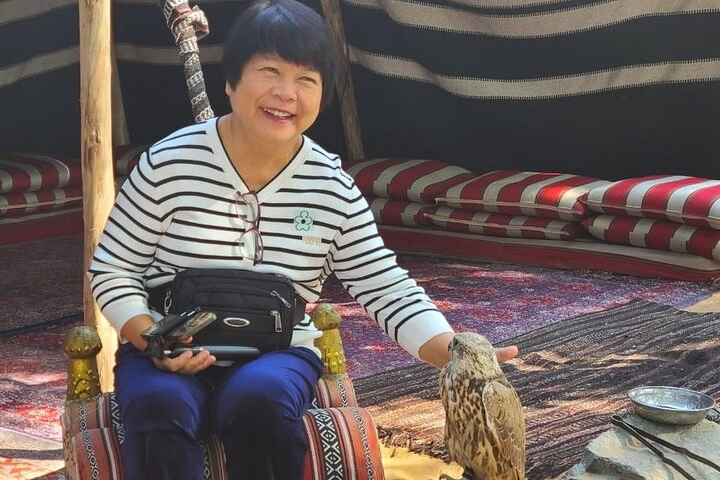
Unlike purpose‑built cultural parks, Emirates Heritage Village Dubai sits on original archaeological land beside Dubai Creek. It was opened in 1997 by the Dubai government to preserve pre‑oil Emirati life. Here you will see a Bedouin goat‑hair tent, a barasti (date‑palm leaf) house, and a falaj irrigation channel. However, most visitors are surprised that the village also contains a small museum of rare photographs from the 1950s. Additionally, the scent of frankincense and cardamom coffee drifts from the traditional café, creating an immersive sensory experience.
How Does It Compare to Similar Experiences?
Dubai has several heritage attractions, but Emirates Heritage Village Dubai is the only one that combines a working souk, live artisan demonstrations, and a waterfront setting. The nearby Al Shindagha Museum focuses on perfume and the creek’s history, while Heritage Village offers tactile crafts – potters spin clay, weavers operate floor looms, and a blacksmith hammers metal. Nevertheless, the village is smaller than the Madinat Jumeirah’s Souk, yet far more authentic. For this reason, our guides recommend it as a half‑day cultural immersion before heading to the Dubai Museum in Al Fahidi.
Why Choose This Experience
Who Is This Experience Best For?
Families with children aged six and up find the hands‑on workshops engaging. History enthusiasts appreciate the curated display of pearl‑diving equipment and fishing nets. Photographers love the golden‑hour light hitting the wind‑tower (barjeel) against the blue sky. Moreover, solo travellers and couples can enjoy a peaceful stroll away from the city’s skyscraper crowds. In particular, anyone interested in how Dubai transformed from a fishing village to a global hub will find this visit indispensable.
Top Reasons to Book
- See authentic Bedouin tents and learn how nomadic families lived in the desert.
- Moreover, Watch artisans create pottery, textiles, and jewellery using centuries‑old methods.
- Tour the pearl‑diving exhibit with original diving weights, nose clips, and wooden dhows.
- Visit the traditional souk where you can purchase handcrafted souvenirs without bargaining pressure.
- Enjoy a complimentary cup of Arabic coffee and dates at the heritage café.
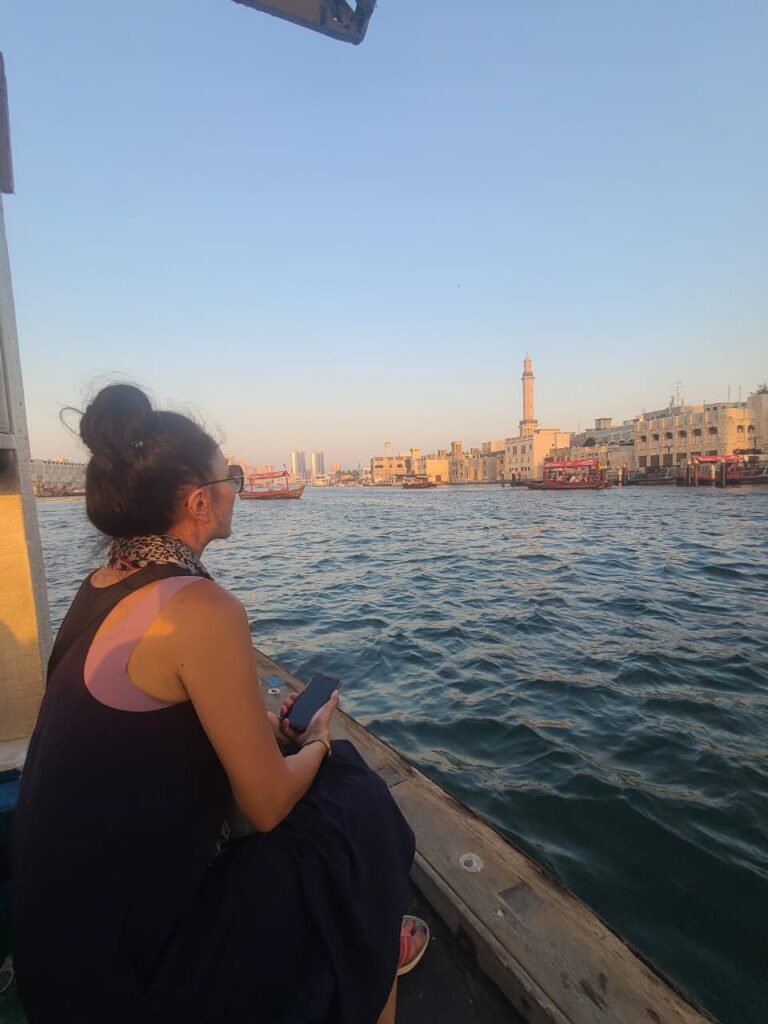
- Combine with a 30‑minute abra (water taxi) ride along Dubai Creek for a complete historical route.
Emirates Heritage Village Dubai Experience
What to Expect During Your Visit
Upon entering, you immediately step into a pre‑1970s Emirati settlement. The path leads past a wind‑tower house, then into the Bedouin tent with woven rugs and a fire pit. Small rooms display traditional costumes, copper coffee pots, and farming tools. However, the highlight is the live demonstration area – watch a potter shape a clay jar on a wheel, then move to the weaving corner where a woman teaches natural dye techniques. Additionally, the small museum upstairs contains over 80 black‑and‑white photographs of Dubai’s ruler, Sheikh Rashid, and the first airport.
Insider Details Most Guides Skip
The village has a hidden “courtyard of the well” that most tourists miss – look for the door behind the bakery room. Another secret: visitors can try grinding coffee beans using a traditional pestle and mortar (a mebrada) after asking an attendant. Furthermore, the best photo spot is the roof terrace of the wind‑tower house, accessible via a narrow staircase near the gift shop. In fact, TripHabibi guests often tell us this vantage point offers the most Instagram‑worthy shot of Dubai Creek’s wooden dhows.
Details, Features & Options
Comparing Your Visit Options
You May Also Like


What Is and Is Not Included
All visitors enjoy free access to the village grounds, the museum, and the artisan demonstrations. Complimentary Arabic coffee and dates are offered at the café – no purchase required. However, the live pottery and weaving demonstrations are scheduled at specific times (typically 10:30 AM and 3:30 PM), so arrive early. Additionally, while the gift shop sells local crafts, private guided tours arranged through TripHabibi include priority entry to the demonstration areas and a dedicated guide who explains each craft in depth.
Questions? Our Local Experts Are Standing By
Get instant answers from our Dubai‑based team — free, no obligation.
💬 Chat on WhatsApp →Planning Your Visit
When Is the Best Time to Visit?
October through April offers pleasant temperatures below 32°C, making outdoor exploration comfortable. The village opens daily from 9:00 AM to 6:00 PM (Saturday to Thursday) and 3:00 PM to 9:00 PM on Fridays. That said, weekday mornings (Sunday to Tuesday) are least crowded – you may have the weaving demonstration entirely to yourself. In fact, our guides recommend arriving at 9:00 AM sharp to experience the serene atmosphere before school groups arrive at 10:00 AM. According to Visit Dubai, the cool season aligns with the peak of cultural tourism, so booking your guide early is advisable.
Practical Tips Before You Go
Wear comfortable walking shoes – the paths are sand and compacted gravel. Notably, bring a refillable water bottle; there are free water stations at the café. Sunscreen and a hat are essential from late March onward. Moreover, carry a reusable bag for any crafts you buy at the souk. For this reason, we suggest leaving large backpacks in your vehicle – lockers are not available. If you are travelling with a pushchair, note that some areas have uneven surfaces, but the main path is wheelchair‑accessible. Check things to do in Dubai for more attraction ideas.
Emirates Heritage Village Dubai Cultural Significance
What Does This Reveal About UAE Culture?
The village demonstrates how Emirati society centred on three pillars: the sea (pearling and fishing), the desert (Bedouin pastoralism), and the oasis (date farming). Each exhibit – from the fishing nets to the falaj irrigation – tells a story of survival and cooperation. Furthermore, the layout mirrors a typical neighbourhood, showing the importance of extended family and communal spaces. In particular, the women’s majlis (sitting room) reveals the role of female elders in decision‑making. The UAE’s modern identity, rooted in hospitality and resilience, becomes clear when you see how these traditions shaped daily life.
Historical Context Every Visitor Should Know
Dubai’s pearl‑diving industry collapsed in the 1930s after Japan developed cultured pearls. The village’s pearl‑diving exhibit includes a full‑size dhow and original lead weights. However, what many overlook is the impact of the discovery of oil in 1966 – within a decade, the population of Dubai tripled. Nevertheless, the Heritage Village preserves the pre‑oil era exactly as the ruler Sheikh Rashid bin Saeed Al Maktoum remembered it. For deeper context, visit the UAE Ministry of Foreign Affairs cultural portal, which details the nation’s rapid modernisation.
Common Visitor Mistakes
What Most Tourists Get Wrong
- Going straight to the souk and missing the demonstration areas – the true value is watching the artisans work.
- Assuming it is open during Friday prayer times; the village closes 12:00–2:00 PM on Fridays.
- Not carrying small change – the artisans accept cash only for handmade items.
- Forgetting that photography is allowed everywhere, but flash is prohibited inside the museum.
- Thinking a 30‑minute walk‑through is enough – allow at least 90 minutes to appreciate all exhibits.
- Ignoring the small museum upstairs – it contains a replica of a traditional school (a “kuttab”) where children learn the Quran.
How to Avoid These Errors
Plan your route: start with the Bedouin tent, then move clockwise to the workshops, then upstairs to the museum, and finish at the souk and café. Additionally, confirm Friday hours online before you go – the schedule shifts during Ramadan. Most importantly, consider booking a private guide from TripHabibi who can pre‑arrange the demonstration schedule and handle transport. For this reason, our guests never miss the pottery firing or the weaving show.
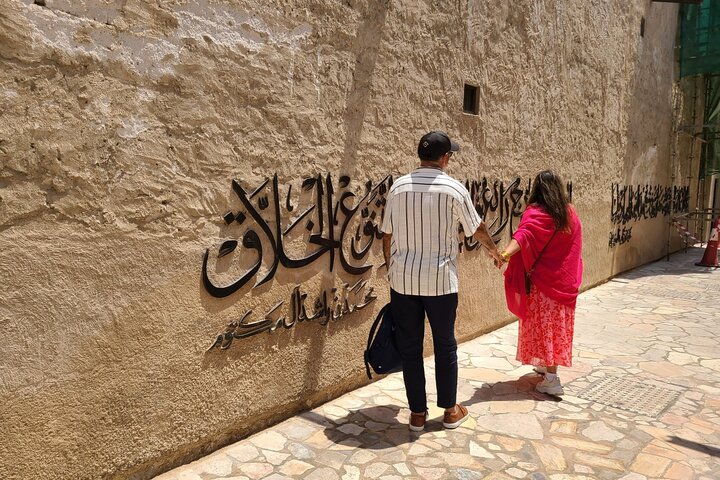
Ask the potter to stamp a small clay tag with your name in Arabic script – it takes two minutes and makes a free souvenir.
Expert Recommendations
How to Get the Most from Your Visit
Combine Emirates Heritage Village Dubai with the adjacent Al Shindagha Museum (less than a 5‑minute walk) to see the award‑winning “Dubai Creek: Birth of a City” exhibit. Furthermore, take a 15‑minute abra ride across the creek to Deira’s Gold Souk and Spice Souk – a seamless half‑day cultural loop. In fact, TripHabibi’s “Heritage & Souks” private tour includes all three stops with a historian guide. Explore our Dubai city tours for more combination ideas. Alternatively, extend your afternoon to day trips from Dubai.
What to Combine It With
For a full cultural immersion, start at the Heritage Village at 9:00 AM, walk to the Al Shindagha Museum, then take an abra to the Spice Souk. Lunch at a local restaurant in Al Fahidi Historical District – try “Arabian Tea House” for traditional Emirati dishes. Moreover, if you have energy left, visit the Dubai Museum in Al Fahidi Fort (15‑minute taxi). Nevertheless, our guides note that the Heritage Village is the most authentic of these, so prioritise it. Chat with our team via WhatsApp to design your perfect itinerary.
How long does Emirates Heritage Village Dubai take?
Most visitors spend 1.5 to 2.5 hours exploring the village, including the museum and demonstrations. However, those who want to watch every artisan or take many photos may need 3 hours. Additionally, our team can tailor the experience to your schedule.
What should I wear for a heritage site visit?
Modest clothing is appreciated – cover shoulders and knees. Light cotton fabrics work best in the heat. Closed‑toe shoes are recommended for the sandy paths. However, our guide will remind you in advance.
Is the heritage village suitable for families with young children?
Yes, children aged four and up enjoy the hands‑on pottery and weaving areas. Pushchairs can navigate the main path, though some corners are bumpy. Furthermore, TripHabibi offers private family tours with flexible pacing.
What is the best time of year to visit the heritage village?
October to April is ideal, with daytime highs between 25°C and 30°C. Summer months (May to September) are very hot but the village remains open. In particular, morning visits before 11 AM avoid the largest tour groups.
Do I need to book the heritage village in advance?
Individual free entry does not require advance booking. However, for private guided tours, reserve at least 48 hours ahead to secure your preferred time. Therefore, TripHabibi recommends booking early via WhatsApp.
Can I combine the heritage village with other UAE attractions?
Absolutely. The village sits beside Al Shindagha Museum and a short abra ride from the Gold Souk. Many visitors also add Al Fahidi Historical District. Additionally, TripHabibi designs full‑day private itineraries combining multiple stops.
Final Thoughts on Emirates Heritage Village Dubai
Ultimately, Emirates Heritage Village Dubai offers one of the most immersive cultural experiences in the UAE. Specifically, its authentic Bedouin tent, live artisans, and pearl‑diving exhibit reveal the resourcefulness that built modern Dubai. Indeed, spending two hours here gives you more insight into Emirati values than a week in the city’s shopping malls. Without question, this attraction deserves a spot on every cultural itinerary.
TripHabibi’s Dubai‑based team offers private, expert‑guided tours with flexible timing and 24/7 support. Additionally, book your experience today or chat with us on WhatsApp — we reply within minutes.
Related Tours
Ready to Explore Dubai? Let’s Make It Happen! 🌆
💬 Chat with Our Tour Experts on WhatsAppRelated Posts