Al Ain Oasis Private Tour is a guided journey from Abu Dhabi to the UAE’s Garden City. Additionally, It combines ancient falaj irrigation systems, centuries-old forts, and the region’s last traditional camel market. Furthermore, This experience offers a rare glimpse into pre-oil Emirati life, just 90 minutes from the cruise port.
- Location: Al Ain city, 90 minutes east of Abu Dhabi
- Best Time to Visit: November to March, early morning (8am–10am)
- Duration: 6–8 hours round trip from Abu Dhabi port
- Highlights: Al Ain Oasis, Al Jahili Fort, camel market, Al Ain Palace Museum
- Ideal For: Cruise passengers, history lovers, families, cultural travellers
Over 3 million travellers visit Abu Dhabi every year — most leave without seeing the real desert hinterland. No visit to the capital is complete without venturing inland. Here’s exactly how to make the most of your port stop with a private guided experience.
Abu Dhabi’s cruise terminal welcomes thousands of passengers each season. Many passengers stay on the Corniche or visit the Grand Mosque. However, those who venture 90 minutes east discover a completely different side of the UAE. The Al Ain region offers lush date plantations, a UNESCO-listed oasis, and forts that tell stories of Bedouin resilience. Additionally, the journey itself reveals dramatic shifts from coastal plains to rocky mountain foothills. For this reason, travellers who book a Al Ain Oasis Private Tour consistently rate it among their most memorable UAE experiences.
At TripHabibi, our team of Dubai-based travel experts has helped over 10,000 travellers experience the UAE authentically. For this reason, we offer private, customised tours — not crowded group experiences. Contact our local experts or message us on WhatsApp for a personalised itinerary.
Ready to Experience Al Ain’s Hidden Gems with a Private Guide?
Skip the crowds. Private tours, flexible timing, expert local guides.
Popular Tours & Activities


Understanding Al Ain Oasis Private Tour
What Makes Al Ain Unique in the UAE?
Al Ain earned UNESCO World Heritage status in 2011 for its 4,000-year-old falaj irrigation system. However, Unlike Dubai’s skyscrapers or Abu Dhabi’s waterfront, Al Ain preserves the UAE’s agricultural heart. In fact, Over 147,000 date palms thrive in the oasis, fed by ancient underground channels. Furthermore, the city holds deep significance as the birthplace of Sheikh Zayed bin Sultan Al Nahyan, the nation’s founding father. His former palace, now a museum, sits at the edge of the oasis. Several key attractions — the fort, palace, and camel market — cluster within a 5-kilometre radius, making them easy to explore in a single private excursion.
How Does This Tour Compare to Similar Experiences?
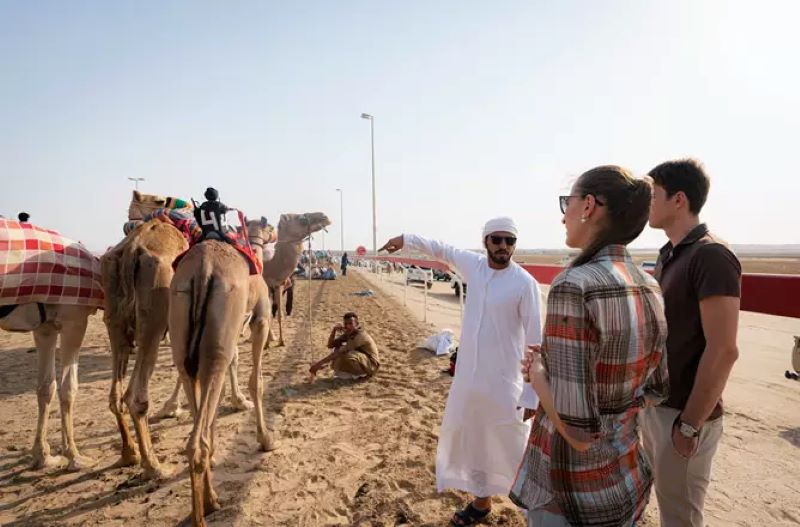
Most Abu Dhabi shore excursions focus on the Corniche, Grand Mosque, and Louvre. However, Al Ain offers something fundamentally different — active cultural immersion rather than passive sightseeing. For this reason, Visitors walk beneath date palms along shaded pathways, listen to water flowing through falaj channels, and watch camels being traded at the market. In contrast, group coaches cannot navigate Al Ain’s narrow oasis paths. Therefore, only private tours allow genuine access to the oasis interior. Abu Dhabi city tours cover the capital’s highlights; this journey reveals its heritage soul.
Why Choose This Experience
Who Is This Experience Best For?
This tour suits cruise passengers with a 6–8 hour port stop. It appeals especially to history enthusiasts, families with children aged 8 and above, and photographers seeking authentic desert imagery. Travellers who value unhurried exploration will appreciate the private format. Moreover, cultural travellers who have already visited Dubai’s modern attractions find Al Ain’s authenticity refreshing. Most importantly, anyone wanting to understand pre-oil Emirati life should book this journey. The experience works well for solo travellers, couples, and small groups alike.
Top Reasons to Book
- No crowds: Al Ain receives far fewer visitors than Abu Dhabi’s main attractions. Your private tour avoids queues entirely.
- Real cultural depth: Meet camel traders, walk falaj channels, and see working date farms — not curated exhibits.
- Flexible timing: Your guide adjusts the schedule around your ship’s berthing window. No rushing back.
- Comfortable transport: Air-conditioned SUV or minibus with bottled water, Wi-Fi, and child seats if needed.
- Local expertise: TripHabibi guides are Emirati-trained historians, not generic drivers with scripts.
- Ship guarantee: We monitor your vessel’s schedule. With a private tour, you never miss departure.
Al Ain Oasis Private Tour Experience
What to Expect During Your Visit
Your guide meets you at the Abu Dhabi cruise terminal with a name sign. As a result, The 90-minute drive east passes through desert plains and the Jebel Hafeet foothills. Notably, Upon arrival, you enter the oasis on foot through shaded pathways. Specifically, The air cools noticeably under the dense palm canopy. Moreover, Your guide explains the falaj system — tunnels that channel groundwater without pumps. After 45 minutes in the oasis, you visit Al Jahili Fort, a 19th-century mud-brick fortress. Interestingly, this fort once protected the oasis from tribal conflicts. The afternoon includes the camel market, where traders negotiate prices until closing at sunset.
Insider Details Most Guides Skip
The camel market operates from dawn until roughly 11am daily, closing earlier than most tour brochures mention. That said, Your private guide arranges an early start to catch maximum activity. Second, the best falaj channels to photograph are near the oasis’s eastern entrance, where water flows above ground for 200 metres. Third, Al Jahili Fort’s tower offers panoramic views of the entire oasis. Most group tours miss this vantage point. Furthermore, the date harvest season from August to October allows visitors to taste fresh medjool dates directly from the trees. TripHabibi guides coordinate this with local farmers whenever possible.
Details, Features & Options
Comparing Your Visit Options
You May Also Like
.jpg)
What Is and Is Not Included
Your Al Ain Oasis Private Tour includes door-to-door transfers from the Abu Dhabi port, an English-speaking guide, bottled water, and entry fees to all listed attractions. The tour also covers parking at the camel market and Al Jahili Fort. However, lunch is not included — your guide will recommend local restaurants upon request. Additionally, tipping for the guide and driver is optional. In particular, Gratuities average 10-15% of the tour cost in the UAE. TripHabibi recommends bringing cash for small purchases at the camel market, where vendors rarely accept cards.
Questions? Our Local Experts Are Standing By
Get instant answers from our Dubai-based team — free, no obligation.
Planning Your Visit
When Is the Best Time to Visit?
The optimal season runs from November through March, when daytime temperatures range between 22°C and 28°C. Consequently, Summer months (June to September) bring extreme heat above 45°C, making walking through the oasis uncomfortable. Meanwhile, For cruise passengers, morning departures at 7:30am allow arrival at the oasis by 9am, before the midday heat intensifies. According to Visit Abu Dhabi, the oasis receives fewer than 200 daily visitors on average, compared to over 10,000 at the Grand Mosque. Therefore, your private experience remains peaceful even during peak winter months.
Practical Tips Before You Go
Wear comfortable walking shoes — the oasis pathways involve approximately 2 kilometres of walking on uneven ground. Above all, Bring sunscreen, a hat, and a refillable water bottle; your guide provides cold water in the vehicle. Photography is permitted at all locations, including inside Al Jahili Fort. Notably, the camel market has strict rules against using flash near the animals. Your guide will alert you before entering. Finally, confirm your ship’s docking time with TripHabibi at least 24 hours in advance. This ensures your guide meets you exactly when you disembark.
Al Ain Oasis Private Tour Cultural Significance
What Does This Reveal About UAE Culture?
The falaj irrigation system demonstrates the ingenuity of early Emirati communities. Therefore, These underground channels brought water from mountain aquifers to farms across harsh desert terrain. Remarkably, some falaj tunnels in Al Ain remain operational after 3,000 years of continuous use. The camel market reveals another cultural layer — camel trading connected Arabian Peninsula tribes for centuries. Furthermore, Al Jahili Fort’s mud-brick construction shows how communities defended their most precious resource: water. Together, these sites tell the story of survival and innovation in one of the world’s most challenging environments.
Historical Context Every Visitor Should Know
Al Ain served as the Buraimi Oasis, a strategic crossroads linking Oman, Saudi Arabia, and the coastal emirates. Subsequently, In 1955, the city witnessed the Buraimi Dispute, a territorial conflict between Saudi Arabia and Abu Dhabi. In addition, The fort’s watchtowers date from this period, when tribal borders were fiercely contested. Indeed, Sheikh Zayed lived in Al Ain until 1966, governing the Eastern Region before becoming ruler of Abu Dhabi. His palace, now the Al Ain Palace Museum, features original furnishings and personal artefacts. Abu Dhabi day trips from Dubai sometimes include Al Ain, but a dedicated private tour allows deeper exploration of this historical layer.
Common Visitor Mistakes
What Most Tourists Get Wrong
- Arriving too late: Group tours often reach the camel market after 10:30am, when trading has finished.
- Skipping the visitor centre: The Al Ain Oasis entry point includes a free exhibition explaining falaj technology — many visitors walk straight past.
- Rushing through: A 30-minute oasis walk misses the shaded side paths where the best irrigation channels flow.
- Ignoring the date farm: The working farm within the oasis offers free tastings during harvest season (August–October).
- Exiting the fort early: Al Jahili Fort’s upper floor holds a photography exhibition of 1960s Al Ain — easily overlooked.
- Not bringing cash: The camel market’s best deals require dirhams in hand. No ATMs exist nearby.
How to Avoid These Errors
Start your Al Ain Oasis Private Tour by 8:30am at the latest. Nevertheless, Your private guide will prioritise the camel market first, then the oasis. Also, At the oasis visitor centre, ask for the 10-minute falaj video presentation — it adds context to everything you see outside. Additionally, Plan at least 60 minutes inside the oasis to reach the eastern water channels. Furthermore, carry 50– in small notes for market purchases. Furthermore, The fort’s exhibition room is easy to miss; request that your guide includes it. TripHabibi’s local team briefs drivers on all these details before every tour.
Request a stop at the Al Ain National Museum (entry ). It houses Bronze Age artefacts from Hili Archaeological Park, including 4,000-year-old jewellery and pottery. Most group tours bypass this gem. Your private guide can add it without extra cost.
Expert Recommendations
How to Get the Most from Your Visit
Book your tour for a weekday — Monday through Wednesday sees the lightest crowds at all sites. Communicate your interests to TripHabibi when booking. History enthusiasts receive extended time at the fort; families with children get interactive falaj demonstrations. Your guide carries a tablet with historical photos showing how Al Ain looked in 1960, before modern development. Additionally, request a midday stop at a local restaurant serving machboos (spiced rice with meat) for an authentic Emirati lunch. This adds roughly 45 minutes to your tour but transforms the experience from a sightseeing trip into a cultural immersion.
What to Combine It With
If your port stop allows 8+ hours, combine Al Ain with a visit to Jebel Hafeet, the UAE’s second-highest peak. The mountain sits 20 minutes south of the oasis and offers panoramic views over the Oman border. Alternatively, the Al Ain Zoo houses Arabian wildlife including oryx, gazelles, and the critically endangered Arabian leopard. For a shorter tour, focus exclusively on the oasis, fort, and camel market. Day trips from Dubai often include Al Ain, but private tours from Abu Dhabi optimise port stop timing more efficiently. TripHabibi’s local team coordinates seamlessly with your vessel’s itinerary.
Questions and Answers
How long does Al Ain Oasis Private Tour take?
The full experience requires 6–8 hours round trip from Abu Dhabi port. The drive each way takes approximately 90 minutes. Additionally, our team can tailor the experience to your ship’s exact schedule.
What should I wear for this excursion?
Lightweight, long clothing covering shoulders and knees is ideal for visiting the fort and mosque. Comfortable walking shoes are essential for the oasis pathways. However, no special dress code applies at the camel market.
Is this tour suitable for families with young children?
Yes, families with children aged 6 and above enjoy the tour. Children love the camel market and the fort’s watchtower. Furthermore, TripHabibi offers private family tours with flexible pacing and child car seats.
What is the best time of year to visit Al Ain?
November through March offers comfortable temperatures between 22°C and 28°C. Summer months above 45°C make walking difficult. In particular, morning visits before 9am avoid the largest tour groups.
Do I need to book this tour in advance?
Yes, advance booking is strongly recommended, especially during cruise season (November to March). Private tours often sell out 2–3 days ahead. Therefore, TripHabibi recommends booking at least 48 hours before your port stop.
Can I combine Al Ain with other Abu Dhabi attractions?
Yes, custom itineraries combine Al Ain with the Sheikh Zayed Grand Mosque or Qasr Al Watan on return. Abu Dhabi layover tours offer similar combinations. Additionally, TripHabibi designs full-day private itineraries matching your port schedule.
Final Thoughts on Al Ain Oasis Private Tour
Ultimately, the Al Ain Oasis Private Tour offers far more than a day trip — it provides a window into UAE heritage untouched by modern development. Walking beneath 147,000 date palms fed by 3,000-year-old falaj channels changes how you understand desert civilisation. Furthermore, the camel market and Al Jahili Fort add layers of living tradition that no museum exhibit can replicate. For cruise passengers with limited time, this private experience transforms a short stopover into a lasting memory.
TripHabibi’s Dubai-based team offers private, expert-guided tours with flexible timing and 24/7 support. Additionally, book your experience today or chat with us on WhatsApp — we reply within minutes. However, Your private guide is ready to reveal the Garden City’s secrets.
Navigation
Ready to Explore Dubai? Let’s Make It Happen! 🌆
💬 Chat with Our Tour Experts on WhatsAppRelated Posts